Every business has a rhythm
Every business has a rhythm. Understanding that rhythm, and then learning to guide and manage it is the key to predictability. Businesses (for better or worse) are anchored around quarterly planning and execution – so let’s think about that rhythm.
There are certain activities that need to happen annually, quarterly, monthly, weekly, and daily. Here’s a sample list of some of the things that should happen in those intervals:
Annual:
Sales Kick Off (SKO)
Demand generation planning
Capacity model planning
Budgets
Compensation planning
President’s Club
Key date setting (SKO, President’s Club, QBR’s)
Quarterly:
Planning for SPIF’s
Account executive performance reviews
Quarterly business reviews (QBR’s)
Demand generation adjustments
Quarterly MBO targets for teams
Pipeline cleanup
Monthly:
Monthly bookings / revenue performance review
MBO check-in
Skip-level check-ins
Budget reviews (actuals vs plan)
Forecast updates
Sales best practices
Sales activity metrics
Weekly:
Weekly PPP (Progress, Plans, Problems) review
RevOps leadership team meeting
CRO leadership team meeting
1:1’s with directs
Weekly hiring meeting with RevOps, finance, HR, talent acquisition
Sales newsletter
Demand generation review (leads, MQL’s, SAL’s, SQL’s)
Sales forecast review / key deal updates
Executive business updates
Daily:
Tracking of key operating metrics:
Sales pipeline review (movement)
Daily demand generation vs targets
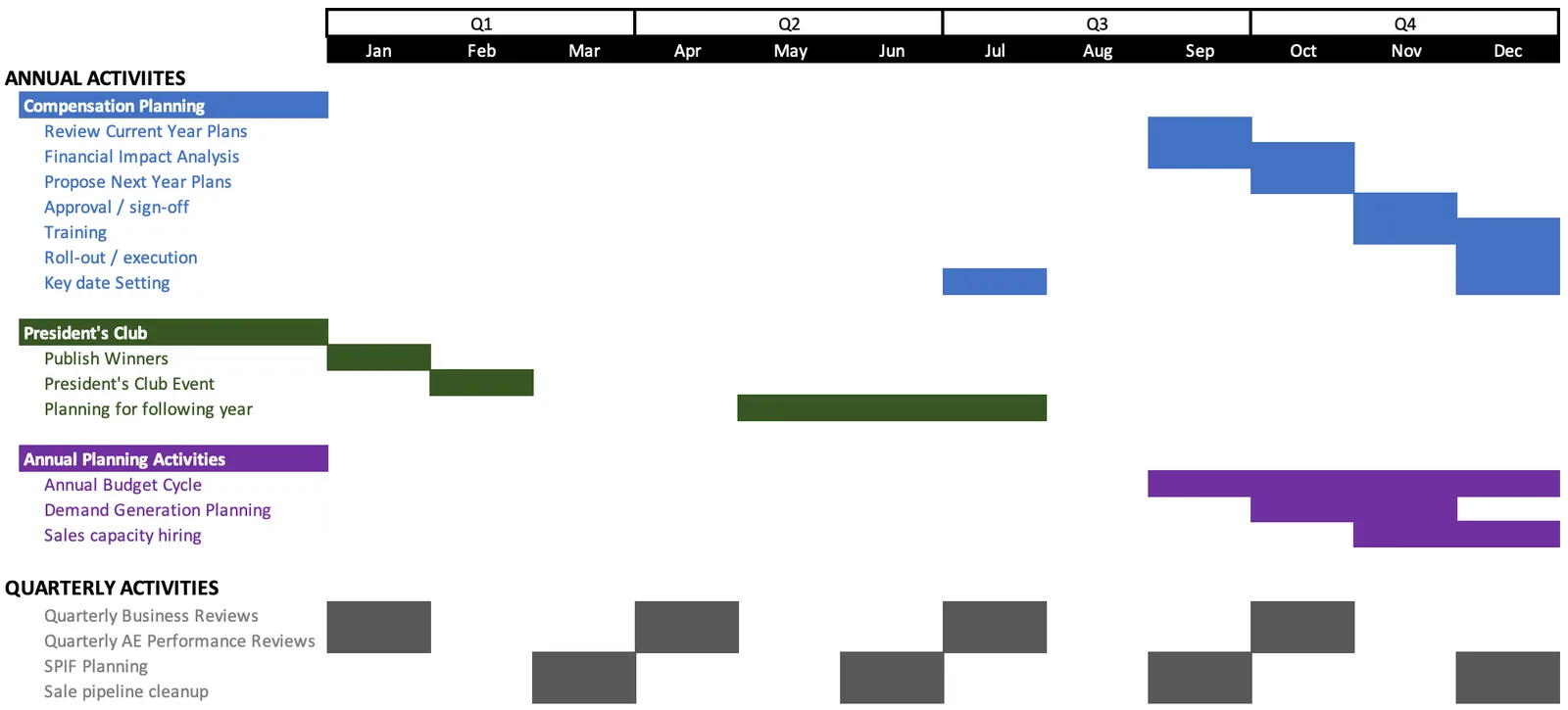
This isn’t meant to be an exhausted list – but provide an idea of the business rhythm that you should be thinking about for your organization. What’s really important when planning activities out (especially annual ones) – is knowing how long they take to get done (planning, steps required, approvals, roll-out) so that you can create the right calendar. For example – there are activities that realistically may take 3-4 months to complete every year (e.g. compensation planning). Understanding how long things take – and the backing into realistic start and end dates is important. Making a list of the sub-activities associated with each major event is also critical.
This is just an example again of what an annual calendar might look like. You would really have things happening every day – but it sometimes helps to pull back and look at the year to make sure you’re thinking about things and setting timelines accordingly. Each year adjust based on what you learn (what activities need to happen, how long do they take, what needs to change, etc). Reviewing an annual view once a month makes sure you are planning for upcoming activities appropriately.
Of course - ending with a shot of Ollie trying to stay warm and dry as the rain continues here in California.

If you’ve got a different approach - I’d love to hear about it!