Do you have the right integrated model to grow your business?

BOOKINGS, DEMAND GEN, PIPELINE, SALES CAPACITY
How much pipeline should you be creating every quarter? Are you setting your future quarters up for success or failure? What key metrics changed from last quarter that are requiring you to make new adjustments this quarter?
If you aren’t asking these types of questions on a continuous basis, you’re missing a big opportunity to hit your revenue and profitability targets. I’ve worked with a lot of companies that do a planning cycle once a year. They take a top-down approach to setting their budget (usually based on some idealistic growth targets from finance) – trickle down their assumptions and lock a plan in place and (try to) execute it. That approach is a recipe for failure.
Smart companies take an integrated approach to planning. They look at their financial growth objectives, their ability to drive demand generation, their sales capacity and execution capabilities, and build an integrated model that incorporates all those things.
Why is this important?
Forecasting and Planning: An integrated financial model gives a clear view of the future. It helps in forecasting revenue and expenses, which in turn aids in decision-making related to hiring, capital expenditure, and more.
Resource Allocation: Knowing the relationship between demand generation, sales activity, and bookings allows for better allocation of resources. For instance, if you can predict how much demand generation activity (e.g., marketing spend) is needed to achieve a certain level of bookings, you can allocate your budget more efficiently.
Performance Measurement: Such models offer a framework for setting benchmarks and key performance indicators (KPIs) for different parts of the business. By monitoring these, companies can quickly identify if they're on track or if any adjustments need to be made.
Investor Relations & Fundraising: An integrated financial model is often a prerequisite for serious discussions with investors. It demonstrates that the company understands its business deeply and can predict future cash flows, revenue, and growth.
Business Synergy: The model aids in aligning different departments. When sales, marketing, and finance work from the same playbook, it results in a more harmonious and efficient operation.
What are the risks of not creating an integrated model?
Poor Decision-Making: Without a clear understanding of the interplay between demand generation, sales, and bookings, a company might overspend in one area and underspend in another, leading to inefficient outcomes. They may inadvertently create a mismatch between opportunities and sales capacity.
Missed Opportunities: A lack of foresight can lead to missed growth opportunities or an inability to swiftly adjust to market changes.
Cash Flow Issues: SaaS companies, particularly those in growth phases, need to be acutely aware of their cash flows. Without an integrated model, there's a risk of running into liquidity issues.
Investor Mistrust: Investors expect clarity and predictability. A company that can't articulate or forecast its business well will struggle to gain or maintain the trust of investors.
Misalignment: Different departments might work based on different assumptions or goals, leading to inefficiencies and internal conflicts.
Having an integrated model that you update quarterly is incredibly important. Why? Because things change. As Mike Tyson once said – “Everybody has a plan until they get punched in the mouth.” No matter how well a plan is prepared, it will inevitably face challenges and obstacles that require improvisation, change, and creativity.
To create a good integrated plan, what are some of the things you need to consider?
Pipeline Creation and Performance Metrics:
Lead creation by source
Lead time in stage by source and segment
Conversion rate by stage in the lead and pipeline funnel by source and segment
Pipeline time in stage by source and segment
Average deal size by source and segment
Average time to close (days) by source and segment
Typical pipeline distribution (pipeline created this quarter typically lands in what future quarters) – current quarter (cq), cq+1, cq+2, etc. – and how does it vary by source and segment – and importantly - is it changing over time?
Sales Metrics:
Average quota attainment
Current sales capacity + planned capacity
Time to hire
Time to fully ramp
Wrapping Up
An important note on ramping – when is the last time you measured time to ramp in detail? I know a lot of companies make assumptions that it’s a certain time period (one quarter, two quarters, three quarters) – but have you actually measured it? At one company I worked with - when we measured it by segment and by source – the assumptions that had been in place for a long time were off by a significant amount. Fixing that had a major impact on the demand gen needed and the sales team actually hitting sales targets.

Ultimately, you want to ensure that your demand generation (by source and segment), pipeline metrics, and sales capacity and execution metrics all sync up. Getting everyone (finance, sales, marketing) on the same page is critical. Looking at all the assumptions and making adjustments on the fly throughout the year is also critical. Building a single, integrated model shared by all those teams is the way to do this. Few companies do this, and even fewer do it well.
One last note I’ve learned from experience – you should be continually building this model six to eight quarters out. This gives you the time to plan, make adjustments, and execute so that your entire organization can be successful.
Hope you enjoyed this article – and if your organization is looking for help building a truly integrated model – please drop me a line at steve@revopz.net – I’d be happy to help. Have some other topics you’d like me to cover? Let me know.
As always, ending with a photo of Ollie. He’s well-fortified eating steak and some fresh pastrami. Good thing, too, since we’ve been experiencing a tropical storm all day and had an earthquake a few hours ago (the biggest one I’ve personally felt here since 2004).
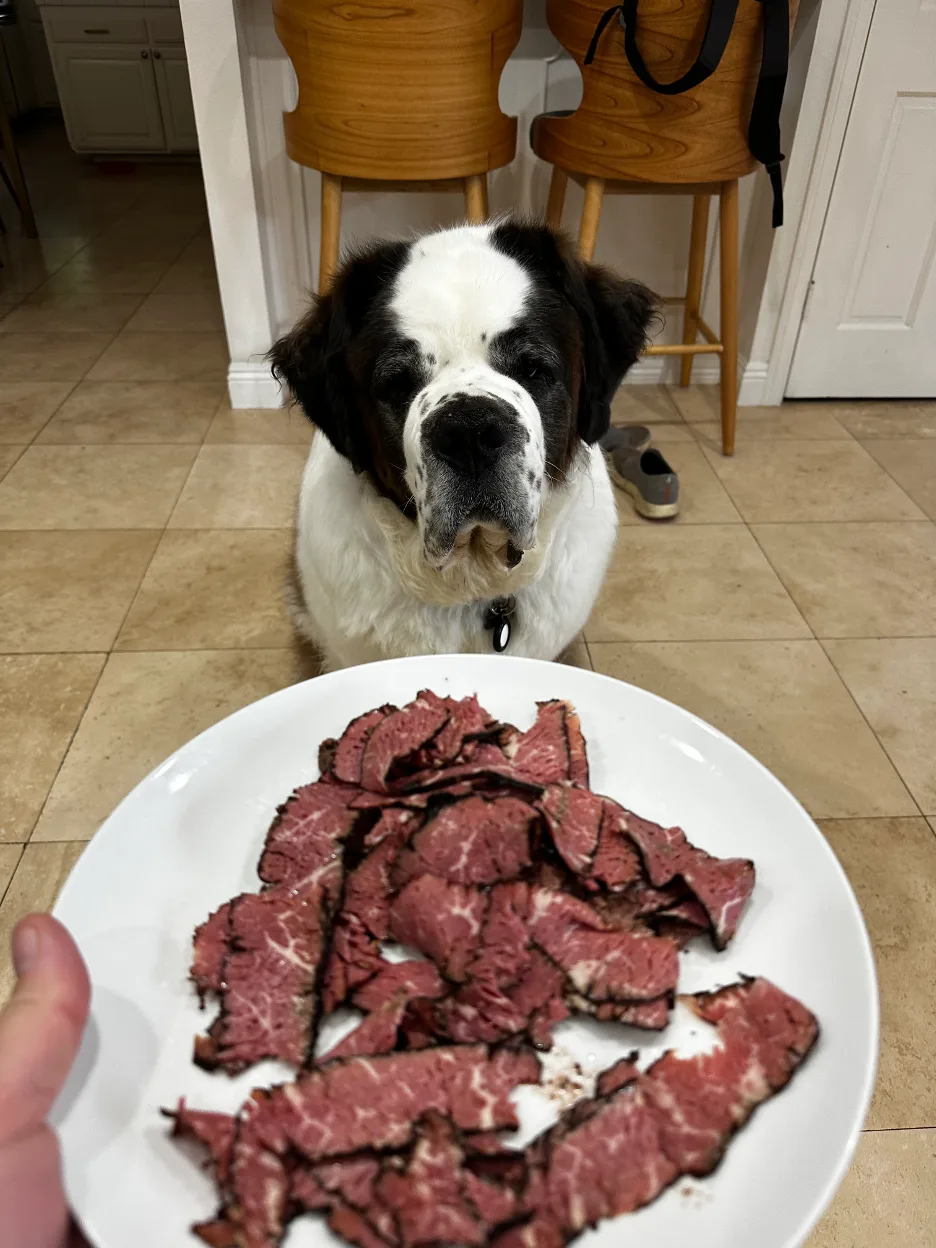
For those of you in Southern California – please stay safe and dry.
Best,
Steve
The RevOpz Group
CEO | Founder