Same Prompt. Three AIs. One Blew Me Away.

This week I got to sit in on an M-School class at Loyola Marymount University (LMU) in Los Angeles. My daughter, Charlotte, is a senior there, and it’s one of her favorite classes. It was great to see first-hand how college classes are taught these days, and how they’re starting to bring AI into the learning process in a productive way.
One of the focus areas this week was marketing attribution models. I’ve run into this one many times over the years working with my marketing and RevOps colleagues. It’s a complex, challenging topic in both B2B and B2C, and most of my own experience is on the B2B side.
As the session went on, I kept thinking about how good these AI tools have gotten at building visuals that explain a concept and bring it to life. So, sitting there next to Charlotte, I put Claude to the test. It quickly built an animated visualization of the exact concept we were discussing. I’ve been showing clients the same thing in recent training sessions, so I wanted to share more of it here.
The test
I wrote a bit about this recently in my post about dashboards, but I wanted to go deeper and show you real-world examples. I also wanted to see how the latest models handle it. So I gave the same simple prompt to Opus 5.5, Gemini Argon 4, and GPT-6 Astra.
“Create an animated explanation of marketing funnels and attribution.”
That’s it. That was the whole thing.
Gemini Argon 4
Gemini went first. I selected Gemini Argon 4, and a few minutes later I had a really nice visualization. As you can see in the video, it explained funnel mechanics and gave me sliders to change the values and see the impact. It also had a great animated section on attribution, plus a third section called “budget distortion lab.” I didn’t scroll down in the video, but below the animation were descriptions of each item with more detail.
One more Gemini note. While I was sitting in class, I also showed a few people how well NotebookLM (now Gemini Notebook) turns summarized content into slides, infographics, videos and more. I still think it’s one of the most underrated educational tools out there. It’s genuinely incredible.
GPT-6 Astra
Next up was GPT-6 Astra. To say I was unimpressed would be an understatement. Exact same prompt. The visuals weren't particularly appealing, and it didn't make anything interactive. It basically made a 60-second explainer video. The content was just "OK," and it paled next to what Gemini and Claude produced. Here's what Astra created.
Claude Opus 5.5
To say Claude blew me away would also be an understatement. Same one-line prompt, completely different result.
I liked Gemini’s a lot. But I have to be honest, I liked Claude’s even better, and the gap between Claude and GPT-6 Astra is astounding. The visuals and the insights were great, and I could change so many things and watch the results update in real time. Gemini had that too, just not as much of it.
Where this is useful
There are plenty of places in business and law where a tool like this can really help.
In business
Board decks that let directors move pricing or spend sliders and watch the effect on margin and payback
Sales commission plans that reps can test against their own deal mix before they sign
Onboarding and compliance training that animates a process step by step, like approvals or a breach response
In law
Family law tools that show how support or property division changes as income, timeshare, or asset values shift
Client settlement models that compare an offer with going to trial once fees, time, and the odds of winning are factored in
Firm economics explainers that show partners how realization, leverage, and a flat-fee mix change profit per partner
There are countless more examples in nearly every industry, and I’m obviously excited about what this means for education.
Go try it
Pick a concept your team struggles to explain and give it to one of these tools. Then experiment with your prompts. I’ve made examples that explain math concepts, one that shows how a baseball spins differently depending on the pitch, and plenty more.
It’s one of the best features in these products, and one of the most overlooked.
Thank you for reading. If you enjoyed this, please share it with others.
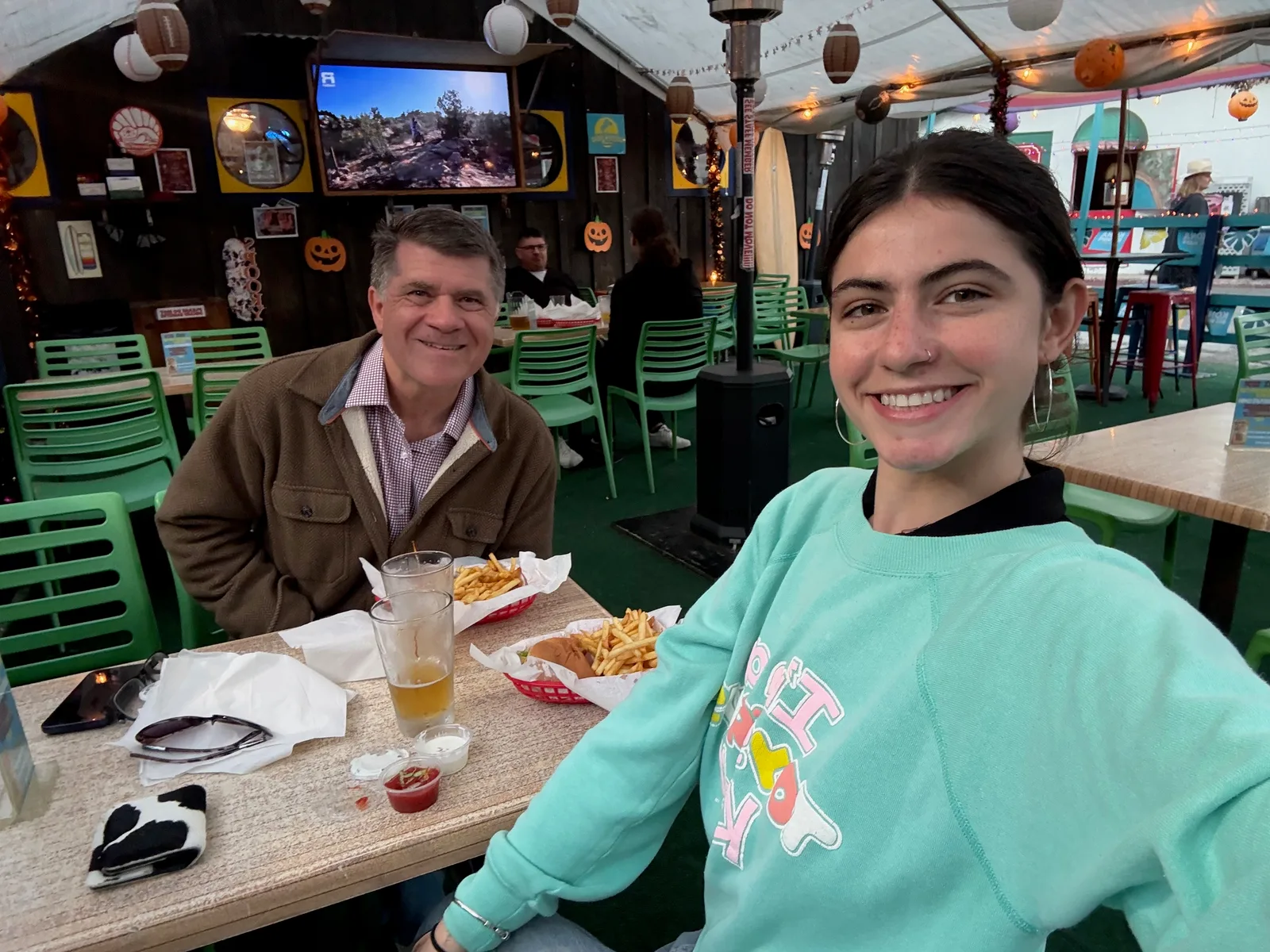
Long-time readers know that today is Magnus’s birthday - he’s two years old. I’ll post pictures in the next article from our little celebration (party hat on a St. Bernard?). He’s definitely having freshly BBQ’d filet mignon. Until then, I’ll share a picture of Charlotte and me enjoying a meal at our favorite hole-in-the-wall burger place (The Shack) after the M-School class (photo posted with her permission). Please feel free to connect with her on LinkedIn (especially if you are in marketing!)